


Sofascore: Live Sports Scores
Sofascore
I use sports apps for one simple reason: I want to know what is happening without opening several league websites, social feeds, and team pages at once. Sofascore: Live Sports Scores is built around that need, but it goes further than a basic score ticker. It brings live results, schedules, statistics, and player profiles into one sports-focused app from Sofascore, making it useful for both a quick glance and a deeper pre-match check.
My first impression is that this is best understood as a sports information hub rather than a place to watch matches. The app is free to install and aimed at Everyone, while optional in-app purchases range from $0.99 to $39.99 per item. That makes the starting point easy: you can try the core experience without paying, then decide whether any optional extras are worthwhile for your habits.
The app has been available since April 28, 2015, and its scale is easy to see in its audience: it has passed 50 million installs, with an average rating of 4.6 from around 1.1 million ratings. Those figures do not automatically make every screen perfect, but they do suggest that Sofascore has become a familiar choice for people who follow more than one competition or sport.
Where people usually get stuck
The biggest adjustment is not installing the app; it is deciding how much information you actually want. A casual user may open it hoping to see one football result and instead encounter a broad sports environment with fixtures, live match details, team pages, player information, and statistics. That depth is the reason I find it valuable, but it can also make the first session feel busier than a simple league-results app.
I recommend beginning with one clear purpose. If you are checking a match that is already in progress, go straight to the relevant sport and competition rather than exploring every available section. If you are planning a weekend of watching, start with the schedule. If you are comparing players or teams, use the profile and statistics areas instead of trying to extract everything from the live score screen.
Related News

Why WhatsApp Messenger Still Makes Everyday Communication Feel Easy

Jurassic World: The Game Is the Better Dino Tycoon for Strategic Players

Threads in Real Life: Who Should Join, Lurk, or Leave

How SHEIN Turned Shopping Into an Endless Content Feed

How to Make Fortnite Feel Smarter on Mobile

Should You Switch to Microsoft Outlook on Mobile?
Another common point of friction is the difference between a score update and a full match centre. A score is quick to read, while a detailed match page asks you to interpret several kinds of information. Events, line-ups, team numbers, player details, and other match context can be useful, but they are not equally important to everyone. I get more from the app when I treat those layers as optional depth rather than trying to read every item.
The practical lesson is to use Sofascore in layers: first confirm the result or current state, then open deeper information only when you have a specific question. This keeps the app from becoming a stream of numbers and makes it much faster for everyday checks.
Why the live screen can feel different from a television broadcast
When I follow a match through an app, I have to remember that a live score is not a substitute for watching the action. The information may tell me what has happened, but it does not provide the emotional rhythm, tactical visual cues, or commentary of a broadcast. That is not a flaw unique to Sofascore; it is the normal trade-off of a results app.
Gallery
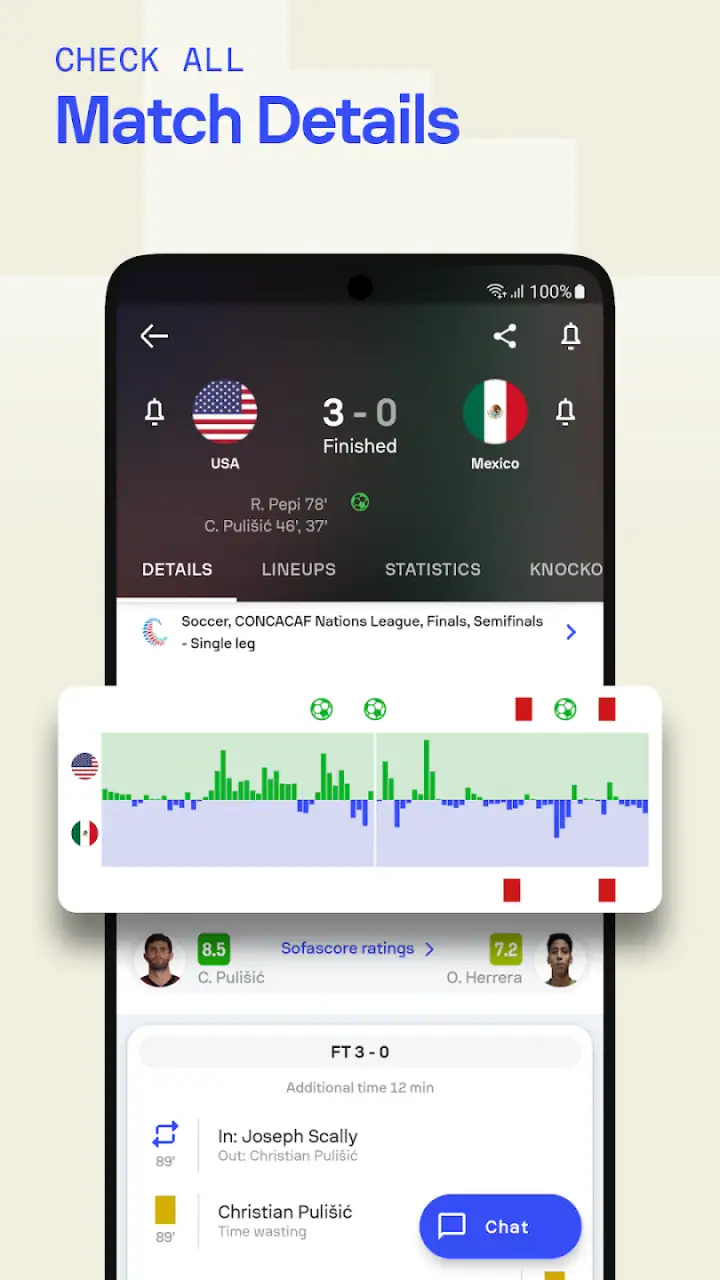
For someone who mainly wants video, a broadcaster’s app or a league’s official streaming service may be the better choice. Sofascore is more useful beside that service, in a second-screen role, or when video is unavailable. I especially like it when I am away from a television and need a compact way to follow several matches without committing to one broadcast.
Setup checks that prevent a confusing first session
Before judging the app, I would check the basics in a calm order. Confirm that the phone has a working internet connection, then reopen the app if a page looks incomplete. Live sports information depends on current data reaching the device, so a weak or changing connection can look like an app problem even when the application itself is functioning normally.
It also helps to keep the first test narrow. Choose one sport, one competition, and one upcoming or live event. Open its schedule, then its detailed page, and only after that explore player or team information. This creates a reliable path through the app and makes it easier to tell whether the issue is with a particular screen or with the whole connection.
If the app opens but a section appears stale, I would avoid repeatedly tapping the same control. Move back to the schedule, open the event again, and give the page a moment to refresh. Repeated tapping rarely adds useful information and can make a crowded interface feel less responsive than it really is.
For a new user, the most useful setup decision is not technical. It is deciding which sports and competitions deserve attention. Sofascore covers a wide range of leagues, so a focused approach reduces noise. I would build a short personal routine around the competitions I actually follow instead of treating the entire catalogue as equally important.
A realistic match-day routine
Imagine that I am working late while two matches I care about are taking place. I open the schedule to see starting times, check the live state of the first match, and then move to the second event without searching through separate team pages. During a break, I can inspect the match details for context. Afterward, I use the player or team information to understand who stood out and what the result means for my next follow-up.
This workflow is more practical than leaving several browser tabs open. It is also less demanding than following a social feed, where important updates are mixed with opinions, jokes, and unrelated posts. Sofascore gives me a structured route from schedule to live event to post-match information.
The trade-off is that I need to choose what to follow. A general news app may be better if I want headlines, interviews, transfer stories, or broad sports reporting. Sofascore is strongest when my question is concrete: when is the match, what is the current score, what happened, and where can I inspect the relevant statistics?
Recovering when the workflow breaks
When a normal routine stops working, I start by separating navigation trouble from data trouble. If the app itself opens and other sections respond, the problem may be limited to one event or one part of the live information. I return to the competition schedule and enter the match again rather than assuming the entire service is unavailable.
If several pages fail at the same time, I check the connection and try again later. Live sports services are especially sensitive to timing: a page can be busy during a major event, or the phone can briefly lose a stable connection while moving between networks. Closing and reopening the app is a reasonable general recovery step, but I would not treat it as a solution for every situation.
Another useful recovery habit is to compare the app with an independent source when the information matters. An official league page, team account, or broadcast can help confirm whether a delay is local to Sofascore or reflects a wider reporting delay. This is particularly sensible for late match incidents, where different sources may update at slightly different moments.
I also avoid making decisions based on a single isolated number. Statistics have meaning only in context: the competition, match state, playing time, and event situation can all affect how a figure should be read. Sofascore gives me a convenient place to investigate, but it does not remove the need for judgment.
Using player and team pages without getting lost
The player profiles are most useful when I arrive with a question. Before a match, I may want to understand a player’s recent involvement or compare roles. After a match, I may want to see which performers deserve a closer look. Opening profiles randomly, by contrast, can turn the app into an endless browsing session with little practical payoff.
The same applies to team pages. I use them as a bridge between a single match and the wider competition. If I am trying to understand a fixture, the team context can make the live statistics more meaningful. If I only need the final score, going into every profile is unnecessary and slows down the simple task.
A non-obvious benefit is that this structure supports different levels of attention during the same day. I can spend a few seconds checking a result in the morning, return for a detailed live view later, and then inspect player information after the event. The app does not force every visit to have the same depth, although its amount of information can tempt users to over-invest time.
When the app is not the cause
Not every missing update means Sofascore is malfunctioning. A sports result may be delayed at the source, a competition may report events differently, or a connection may be unstable. If only one match looks unusual while other schedules load normally, I would first consider the event itself rather than immediately blaming the whole app.
Phone conditions matter too. Low memory, aggressive background restrictions, an outdated operating environment, or a crowded network can affect how any live-information app behaves. Safe general troubleshooting is enough at first: reconnect, reopen the app, test another event, and check an independent source. I would avoid changing several device settings at once because that makes it harder to know what helped.
There is also a human cause: misunderstanding the competition or event. Similar team names, different league rounds, postponed fixtures, and separate match categories can lead to a perfectly valid result being mistaken for the wrong one. I find it worthwhile to confirm the competition and scheduled event before deciding that the displayed information is incorrect.
This is where Sofascore differs from a social feed. A social platform may surface an update faster because people are posting about it, but it is also noisier and less structured. Sofascore gives me a cleaner sports workflow, while official sources remain useful for confirmation and announcements. Neither approach replaces the other completely.
Who benefits most from the depth
I would recommend the app to people who follow several leagues, switch between sports, or want more than a final score. It is particularly convenient for users who need schedules and match context in one place, and for anyone who likes checking player information after watching an event.
It also suits a fan who cannot watch every game. A quick schedule check helps decide what is worth following, while the live and statistical views provide a way to stay informed when work, travel, or family commitments get in the way. The app is not a replacement for the match itself, but it is a strong companion for fragmented attention.
I would be more cautious about recommending it to someone who follows only one local team and wants a very minimal experience. That person may prefer an official club or league app with fewer sections and a more direct focus. Likewise, anyone expecting live video, long-form journalism, or a social community should look elsewhere or use Sofascore alongside another service.
Free access and optional spending
The free entry point is important because it lets me judge the basic workflow before considering any purchase. Optional items cost from $0.99 to $39.99 each, so I would review the app’s normal use first and only pay if an extra genuinely improves the way I follow sports. The right value depends on whether I use the app occasionally or return throughout every match week.
I would not install it solely because of its large audience or high average rating. Those are useful signs of popularity, but personal fit matters more. A person who wants quick scores may find the depth unnecessary, while a multi-league follower may consider the broad information far more useful than a stripped-down alternative.
My practical verdict after regular use
Sofascore: Live Sports Scores is a capable sports companion with a clear strength: it connects schedules, live results, statistics, and player profiles into a single routine. I value it most when I have several sports questions in one day and do not want to assemble answers from unrelated sources.
Its main weakness is also connected to that strength. The amount of information can slow down users who only want one answer, and the app cannot solve the limitations of live data, internet access, or the difference between statistics and actual viewing. A focused setup and a habit of checking one event at a time make the experience much easier.
For me, the deciding question is simple: do you want a scoreboard, or do you want a sports reference tool that starts with the scoreboard? If it is the first, a simpler official app may be more comfortable. If it is the second, Sofascore is worth trying. I would start free, test it during a real match day, use the schedule-to-event-to-profile workflow, and decide from there whether its depth helps rather than distracts.
FAQs for Sofascore: Live Sports Scores
What sports can I track with Sofascore?
Sofascore offers live scores and statistics for a wide range of sports, including football (soccer), basketball, tennis, cricket, rugby, and more. Currently, it covers over 20 different sports, making it a comprehensive tool for sports enthusiasts who want real-time updates and detailed statistics on their favorite games.
Is Sofascore free to use?
Yes, Sofascore is free to download and use. However, it offers in-app purchases and subscriptions for advanced features, such as ad-free experiences and detailed analytics. This allows users to customize their experience based on their needs and preferences while supporting the app's development.
How accurate are the live scores and statistics on Sofascore?
Sofascore is renowned for its accuracy and reliability in providing live scores and statistics. The app sources data from official and trusted providers, ensuring that users receive timely and precise information. However, minor delays might occur due to network issues or data provider updates.
Does Sofascore allow for personalized notifications?
Yes, Sofascore offers personalized notifications, allowing users to receive updates on specific teams, matches, or sports. You can customize alerts for goals, match starts, or any significant event, ensuring you never miss an important update related to your favorite sports.
Can I use Sofascore offline?
While Sofascore requires an internet connection to provide real-time updates and data, you can access previously loaded information offline. However, for the most accurate and up-to-date scores and statistics, a stable internet connection is recommended. Offline access is limited to previously viewed content.
Pros
- Detailed live scores and stats.
- User-friendly interface design.
- Customizable notifications.
- Wide range of sports covered.
- Fast updates and minimal lag.
Cons
- Ads can be intrusive.
- Some features require premium.
- Occasional sync issues.
- Limited offline functionality.
- Battery consumption is high.


